
How to Spot an Investment Ready Suburb in 2026 (Before Everyone Else)
Most investors pick suburbs by reading hotspot lists and assuming last year’s winners will keep running. You already know how that story usually ends. A few years later the numbers flatten, the rent growth slows and the “sure thing” looks suspiciously average.
In 2026 the stakes are higher. National dwelling values have been rising again, but the pace is uneven across cities and regions. Rental markets are still tight in many areas, yet price growth in some pockets is modest rather than explosive. An investment ready suburb today is not just somewhere that boomed during lockdown or flickered on a social media hotspot map.
If you want to build a serious portfolio, you need a way to test whether a suburb is structurally sound for investment, not just popular this month.
Core Misconception: Confusing Activity With Quality
Most investors confuse high activity with high quality.
They see more listings, more auctions and more news about a suburb and assume that means strong fundamentals. In reality, activity often peaks at the point where risk is quietly rising. Short bursts of price growth can be driven by FOMO, incentives or one‑off projects rather than deep, durable demand.
You can see this in suburbs that spiked on the back of one new road, one mine, or one tax policy. When conditions normalise, prices drift or stall while investors are still holding high‑entry assets. That is the exact opposite of what you want as a strategic accumulator.
The real question is not “Where is everyone buying?” but “Is this suburb genuinely investment ready for the next decade?”
What An Investment Ready Suburb Actually Looks Like
An investment ready suburb in 2026 has three broad characteristics:
Consistent, diversified demand: People want to live there for multiple reasons: jobs, schooling, lifestyle, connectivity and services.
Tight but sustainable rental conditions: Vacancy rates are low, rents have been rising steadily, and tenant enquiry is broad rather than reliant on one niche group.
Evidence of resilience through different market phases: Price growth has not been a straight vertical line from one stimulus period. Instead, it shows steady performance across multiple years and interest‑rate environments.
That mix gives you something much more valuable than a one‑year spike. It gives you a suburb that can carry your portfolio through both good and ordinary years.
This is where understanding cash flow vs capital growth property matters before you choose purely yield‑focused suburbs as your main strategy, because the wrong balance can leave you stuck in suburbs that look good on yield but struggle on long‑term demand and exit options.
The Practical Test For An Investment Ready Suburb
1. Demand depth: Who actually wants to live here?
An investment ready suburb starts with real humans who like living there, not just investors looking at spreadsheets.
What to look for
Stable or growing population and household formation in the wider LGA, not just a single estate.
Diverse employment access: proximity to multiple job nodes, business parks, hospitals or universities rather than one major employer.
Owner‑occupier presence: a solid base of residents who buy to live, not just rent; suburbs dominated by investors tend to be more volatile in downturns.
Lifestyle anchors: transport connections, schools, shops, health services and green space that make the area liveable, not just affordable.
A simple starting point is to look at population growth and household formation data from the Australian Bureau of Statistics for the region you’re targeting, so you can see whether demand is actually building, not just assumed. You can pull this from the ABS’ Regional population release, which breaks down growth by local area and capital city.
Why it matters
When demand is diversified, your risk does not hinge on one project, one industry or one demographic. That means more consistent tenant enquiry, better quality renters and a broader buyer pool when you eventually sell. For example, when you look at our write‑up on Newcomb, VIC 3219 – Geelong’s affordable growth suburb, you see exactly this combination of access to jobs, services and lifestyle drivers rather than just cheap entry price.
2. Rental reality: Is the rental market doing the heavy lifting?
Plenty of suburbs show decent capital growth on paper but feel soft on the ground when you try to lease a property.
What to look for
Vacancy rate below around 2 per cent on a consistent basis, not just one unusual quarter.
Rental growth running ahead of inflation over several years, indicating real pressure, not just indexation.
Reasonable days on market for rentals, suggesting tenants do not have excessive choice.
Balanced rent‑to‑income ratio: yields that are strong enough to support your cash flow without stretching local tenants to breaking point.
To sanity‑check what you’re hearing from agents, cross‑check local commentary against vacancy rates and asking rent trends from SQM Research. Their free suburb data helps you confirm that the tight conditions you see at inspections are backed by hard numbers, and that vacancy hasn’t been rising quietly while headlines talk about rental stress.
Why it matters
In early 2026, national vacancy rates in many capitals are still sitting around historically low levels, which keeps well‑located, established suburbs skewed in favour of landlords. The key for you is not chasing the lowest vacancy figure on the chart, but finding suburbs where rents have been rising steadily, vacancy has stayed contained, and tenants are drawn from a broad base, not just one industry or one university.
3. Price behaviour: How has this suburb handled past cycles?
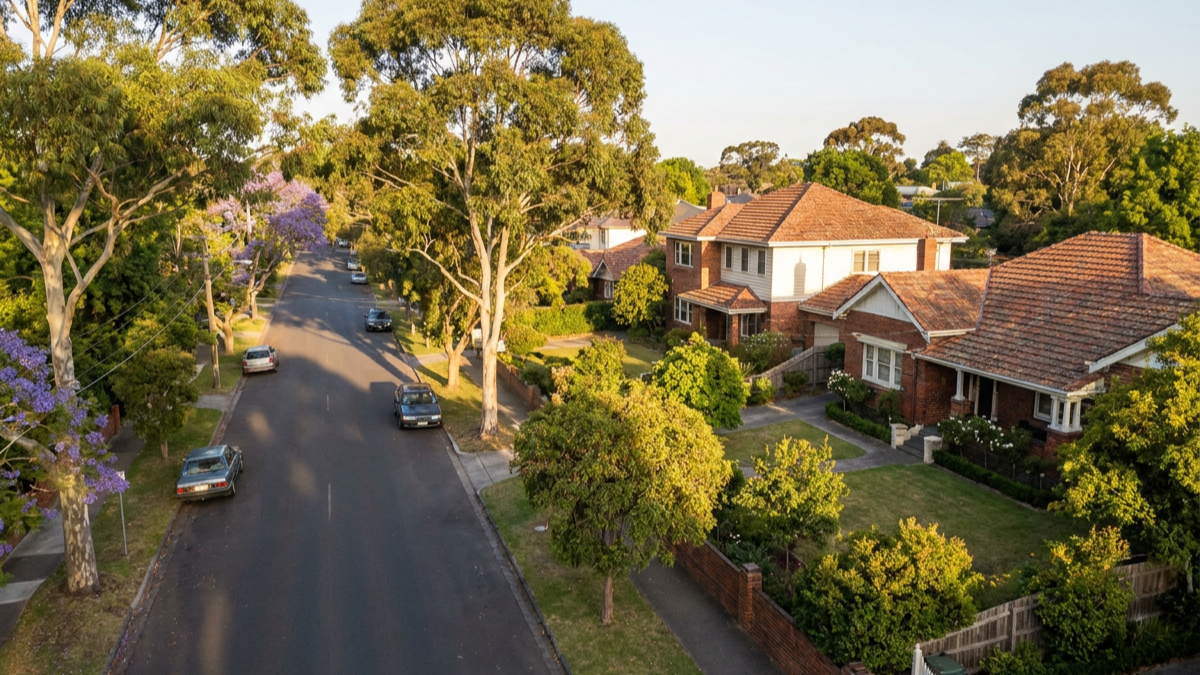
The third part of the test is how the suburb has already behaved when conditions changed.
What to look for
Longer‑term price growth: look at 10‑year and 5‑year performance rather than only the last 12 months.
Drawdowns in weaker years: did the suburb crash, flatline, or simply soften before resuming steady growth?
Current price momentum: are prices creeping up again, or is the suburb still digesting a big run‑up from the last boom?
Land component and scarcity: older houses on good blocks in established streets often show more resilient growth than high‑density new builds in oversupplied pockets.
Why it matters
You are not just buying this year’s result; you are buying a pattern of behaviour. When you examine a suburb’s price history across different rate environments and sentiment shifts, you start to see which areas consistently grind higher and which ones only move when the whole country is booming. That’s why you see Trade View’s focus on locations that blend affordability with a history of steady growth, such as the suburbs featured in Best Investment Suburbs in NSW for 2026, rather than chasing whatever made this month’s national headline.
How To Check If A Suburb Is Investment Ready In 30 Minutes
Serious investors often want a quick filter before they sink hours into a deep dive. A simple way to triage suburbs is:
Scan the macro data
Look up population and household trends for the region using recent ABS regional population releases.
Check recent price and rent changes on reputable portals or from your existing research subscriptions.
Check rental tightness and price behaviour
Use SQM Research vacancy and asking‑rent charts to see how tight the rental market really is and whether yields have held through different phases.
Compare the suburb’s five‑ to ten‑year growth history against its city average to understand how it behaves in different parts of the cycle.
Ground‑truth with local signals
Scan listings to see the quality of housing stock, the types of streets that attract strong interest and the balance of houses versus units.
Call a couple of property managers and ask how many applications they receive for typical rentals and how long good properties stay on the market.
Once a suburb passes this quick filter, move it into your full 2026 due diligence checklist for investment property buyers so you are testing it with the same standards every time, instead of reinventing your process with each listing.
Why Not Just Chase The “Top 100 Suburbs For 2026”?

You will see plenty of “Top suburbs for 2026” lists this year. Many draw on solid research and highlight areas with strong prospects. The problem is what happens when thousands of investors all pile into the same headline suburbs at once.
Hotspot lists rarely talk about:
Entry price risk and what happens if you buy after the main run‑up
Your portfolio’s need for diversification across cities, price points and tenant bases
How to evaluate similar suburbs that did not make the list but share the same fundamentals
Lists like Trade View’s own Best Investment Suburbs in NSW for 2026 are most useful when you treat them as a starting point. The real edge comes from running each suburb through your investment ready lens so you understand whether the demand, rental reality and price behaviour actually line up with your strategy.
Practical Example: Applying The Investment Ready Test
Imagine you are comparing two middle‑ring suburbs of a major capital:
Suburb A has recently made headlines as a growth hotspot. Prices surged 30 per cent over two years, vacancy rates have tightened, but a large proportion of recent buyers are investors chasing yield. New apartment projects are in the pipeline.
Suburb B has grown steadily for a decade, supported by proximity to multiple employment hubs, strong owner‑occupier presence and limited new land supply. Rents have risen every few years and vacancy has stayed low, but it never appears in flashy top‑ten lists.
Using the investment ready suburb test:
Suburb A scores well on recent returns but poorly on resilience and diversification of demand.
Suburb B scores more modestly on recent growth but strongly on long‑term stability, rental depth and multiple exit options.
For a strategic accumulator, Suburb B often makes more sense even if it feels less exciting on paper. It looks far more like the affordable growth locations Trade View profiles when analysing suburbs such as Newcomb and other Geelong pockets, where the story is not just short‑term numbers but the quality of underlying demand.
Questions Investors Are Asking

How do I know if a suburb is a good investment area?
Look for a mix of stable population growth, diverse employment access, strong owner‑occupier demand, low vacancy rates and steady price performance over at least five to ten years. If a suburb only looks good on one of those measures, it is not truly investment ready.
What vacancy rate is healthy for an investment ready suburb?
In most markets a vacancy rate below roughly 2 per cent suggests a tight rental environment, especially when it has been that way for an extended period rather than one quarter. Numbers near zero can indicate severe stress, so focus on consistent, sustainable tightness backed by real tenant demand rather than chasing the lowest possible number.
Should I avoid suburbs that already had big growth in 2024–2025?
Not automatically, but you should be cautious. Some suburbs that surged during earlier stimulus periods are now normalising, while others remain supported by genuine demand and limited supply. Study longer‑term growth, rent trends and the local economy rather than buying purely off past percentage charts or annual “top suburb” lists.
Is it better to buy in a cheaper suburb with high yield or a pricier suburb with lower yield?
It depends on your portfolio, but in 2026 many serious investors are favouring locations with balanced yield and long‑term growth supported by diverse demand and solid infrastructure. High yield alone, especially in fringe or single‑industry towns, can hide significant risk when cycles turn.
Investing in 2026: building your own map of investment ready suburbs
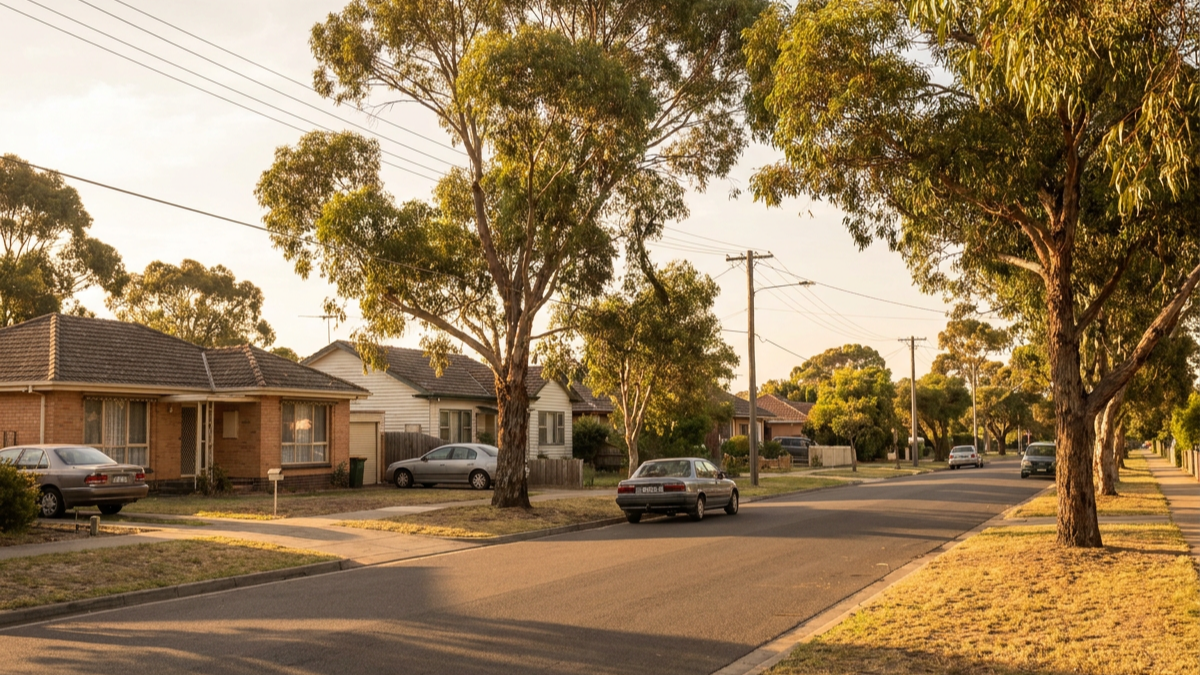
In a market where sentiment is broadly positive and some areas are seeing renewed price momentum, it is tempting to rush into whatever suburb seems to be moving fastest. Strategic accumulators do the opposite. They slow down, look through the hype and ask whether a suburb is genuinely investment ready for the next ten to fifteen years.
If you consistently focus on demand depth, rental reality and price behaviour through different cycles, you will gradually build your own map of investment ready suburbs that fits your portfolio, not social media’s attention span. From there, you can deliberately recycle capital using a clear plan for how to use equity to grow your property portfolio, instead of buying opportunistically and hoping it works out.