
Is Launceston a Good Place to Invest in 2026?
If you are looking at Tasmania in 2026, Launceston has likely appeared on your radar, especially if rental yield is important to you.
Stop using headline yield as your shortcut for deciding whether a suburb is investment ready.
A high yield can signal strong tenant demand and lower entry prices. It can also signal weaker long-term growth or softer buyer depth. In a market where holding costs and interest rates matter, you need to understand what sits behind the number.
If you are prioritising stable rental income, or building a portfolio methodically and want income to support your next purchase, Launceston can play a role. The key is evaluating it with discipline rather than optimism.
Where Launceston Sits in the Tasmanian Market

Launceston functions as a regional services and employment hub. Its economy is supported by:
Healthcare and hospital infrastructure
Education institutions
Government services
Logistics and transport
If you are buying for rental income, employment-backed demand is important. Rental markets anchored to essential services tend to be more resilient than markets driven by short-term lifestyle trends.
That does not mean every suburb performs equally. It means the city has structural demand drivers that can support a rental-led strategy when suburb selection is done properly.
Rental Yields and Tenant Demand in Launceston
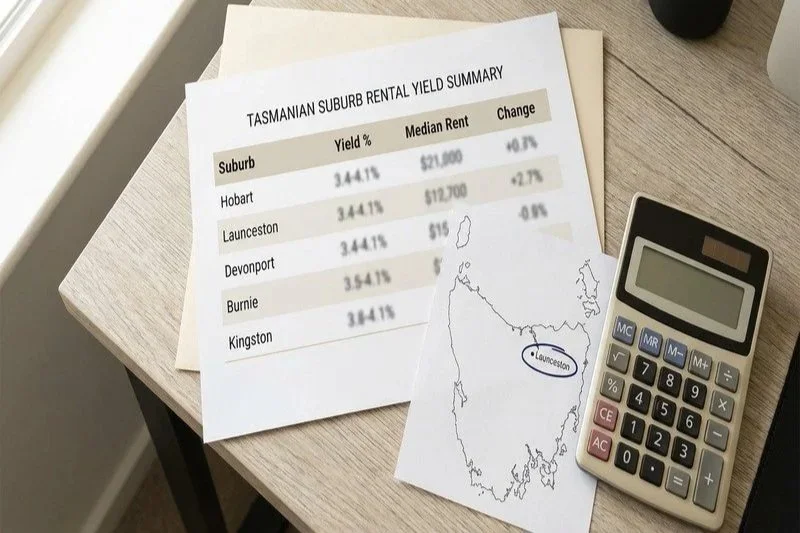
Launceston’s gross rental yields typically range between 5 to 7 percent, depending on suburb and property type. That spread can materially impact your annual income. For example, the difference between 4 percent and 6 percent yield on the same capital base is significant over time. Income compounds. It also reduces holding pressure during rate cycles.
If you want to understand how those yield ranges interact with rate changes and holding costs across Australia, Cashflow & Rental Yield In 2026 breaks down what investors should watch before relying on headline yield alone. However, yield on its own tells you very little.
Before you commit, you need to validate:
Whether advertised rent reflects realistic market demand
Vacancy trends at suburb level
Tenant depth and competition
The quality of the housing stock
If you are prioritising stable rental income, the question is not “What is the yield?” It is “Will this rent hold under conservative assumptions?”
Understanding Long-Term Returns in Context

Higher yields in Launceston are often a function of:
Lower entry prices compared to mainland capitals
Steady but not explosive capital growth
Consistent tenant demand in employment-linked areas
Typical annual capital growth in Launceston has historically ranged around 2 to 4 percent, rather than the 6 to 8 percent often targeted in high-growth metropolitan markets.
If you are chasing aggressive short-term appreciation, that range may not excite you.
If you are focused on stable income and long-term compounding, moderate growth combined with reliable yield can create a more controlled portfolio structure.
The role the property plays in your strategy matters more than whether the city is labelled “growth” or “yield.”
Risks to Consider Before Buying
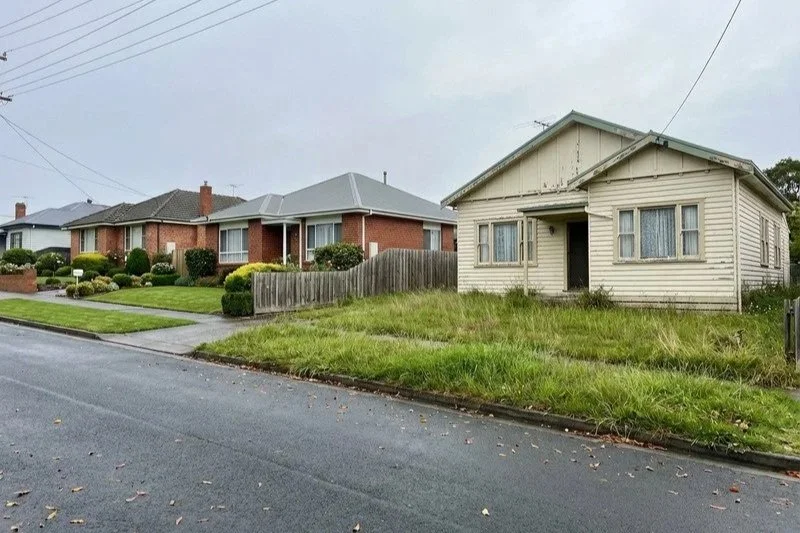
No market is risk free. If you are assessing Launceston, evaluate these constraints clearly.
Market size
Launceston is smaller than major capitals. Buyer pools are narrower. Overpaying reduces flexibility later.
Suburb-level fragmentation
Performance varies significantly by suburb and sometimes by street. Two properties minutes apart can perform differently in vacancy and resale demand.
Growth ceiling expectations
If you are expecting rapid price acceleration, you may be disappointed. Income stability is the more consistent strength here. The biggest risk is confusing attractive yield with low risk. High Yield Often Looks Safer Than It Really Is digs deeper into this trap and shows how investors can mistake strong rent for a low‑risk position when the fundamentals do not actually support it.
The 3 Checks to Decide if Launceston Fits Your Strategy in 2026

If you want a grounded way to assess Launceston, use these three checks.
1. Stress-test rental resilience
If you are buying for income, model conservatively.
Include property management, insurance, council rates, maintenance, and a vacancy allowance. Run your numbers at a higher interest rate than today. If the property still feels manageable, that is a good sign.
If it only works in perfect conditions, it is not stable income. It is fragile leverage.
The goal is comfort under pressure, not optimism under best case assumptions.
2. Validate tenant demand at suburb level
Launceston is not one uniform market.
If you are prioritising stable rental income, focus on suburbs supported by:
Employment hubs
Access to hospitals and schools
Transport connectivity
Established residential demand
Ask yourself why tenants rent in that pocket. If the answer is long-term practicality, demand tends to be steadier. If the answer is temporary affordability or trend-driven appeal, volatility risk increases.
Yield without demand depth creates stress.
3. Protect your exit and borrowing flexibility
Even if your primary goal is income, think about your future options.
If you want to refinance, upgrade, or sell later, you need an asset that appeals beyond just investors. Owner-occupier appeal strengthens liquidity and valuation support.
Look at:
Layout and functionality
Condition and presentation
Street quality
Proximity to services
A property that is easy to rent and desirable to future buyers protects your flexibility.
That flexibility supports portfolio growth.
How Launceston Can Function in a Portfolio

If you are building long-term wealth through property, think about role and function.
A well-selected Launceston property can provide:
Reliable rental income in the 5 to 7 percent range
Moderate capital growth in the 2 to 4 percent range
Lower entry price compared to many mainland cities
Income that reduces portfolio holding pressure
If your objective is to stabilise cash flow while positioning for future acquisitions, markets like Launceston can serve as income anchors.
They are not designed to deliver dramatic short-term gains. They are designed to deliver consistency.
Consistency compounds.
Conclusion
If you are prioritising stable rental income in 2026, Launceston deserves structured consideration. Stop using yield as the shortcut. Use it as the starting point.
If you:
Stress-test the rent
Confirm suburb-level demand
Choose an asset that protects your flexibility
You significantly improve the probability of owning a property that performs through different market cycles. Launceston is not about hype. It is about function. If you want clarity on whether it fits your numbers and long-term plan, the next step is aligning suburb selection and asset type with your income comfort and broader portfolio strategy.
Running any Launceston short‑list through the 2026 Due Diligence Checklist For Investment Property Buyers helps make sure the numbers, suburb and asset type all line up before you commit.